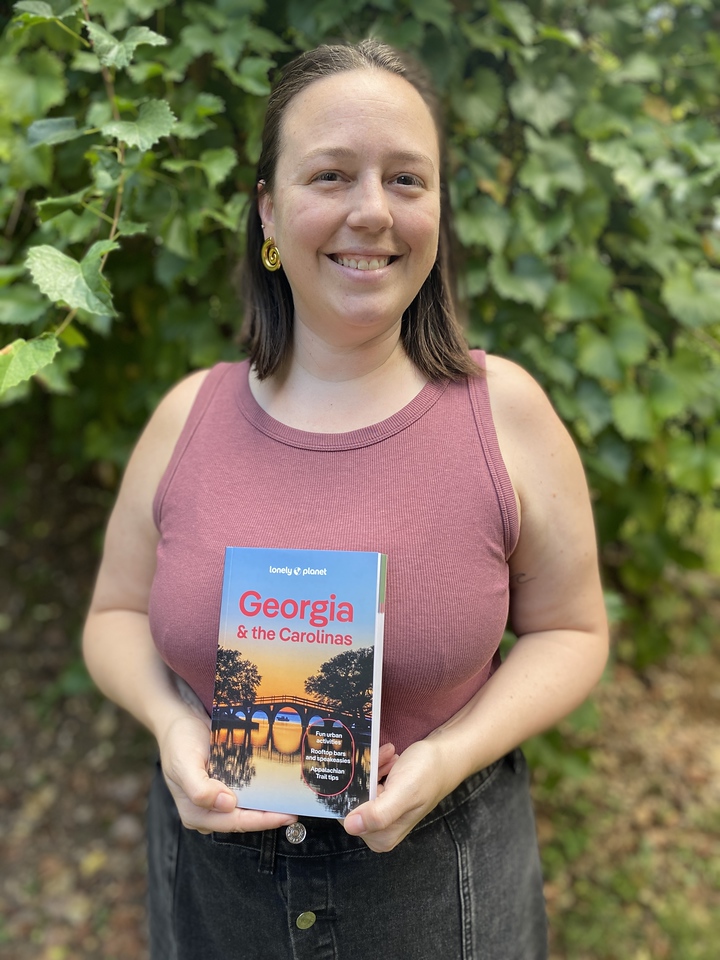
Now that I have my first Lonely Planet guidebook under my belt, I wanted to share some tips that might be helpful to others working with guidebook publishers. I’d written one before, but it was my own, so I didn’t have an existing format to follow or a content management system to learn.
As with many brands, you can’t take press trips or use comps when researching a guidebook for Lonely Planet. There are several reasons behind this, but if you’re wondering why, read the book Do Travel Writers Go To Hell?, which involves an author with some sketchy ethics.
This was sort of tricky for me since I have so many contacts in the industry, especially in my home state. Basically, you’re given an amount of money that is both your budget to travel on and your payment for the project. You have to set aside the money you’ll need to actually go and visit, not to mention pay for museum entry and meals.
To save money, I camped in my car a few times, brought some snacks from home, and got a museum pass from my local library, something anyone in the Georgia library system can do. The biggest advice I got from a fellow writer was to use this research for other stories, which was the best way I earned extra income during this period. Here are a few examples:
- A post-hurricane story on an Augusta business for Southern Living that never ran
- A story on Richland Rum and other Georgia rum distilleries for Food and Wine
- A story on the Okefenokee Swamp for the Saturday Evening Post
- Another story on the swamp for Travel + Leisure
- Some digital story updates for Lonely Planet
It wasn’t a crazy amount of money, a little over $1,000, but it helped. I also have a few more ideas in mind from Columbus, Albany, and Macon.
 Caroline Eubanks